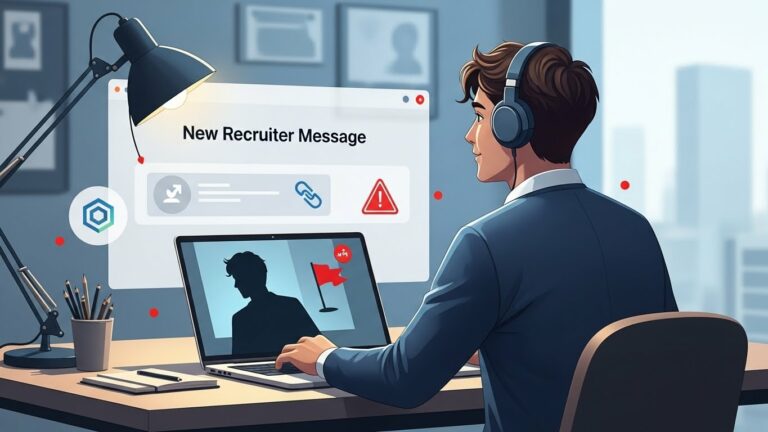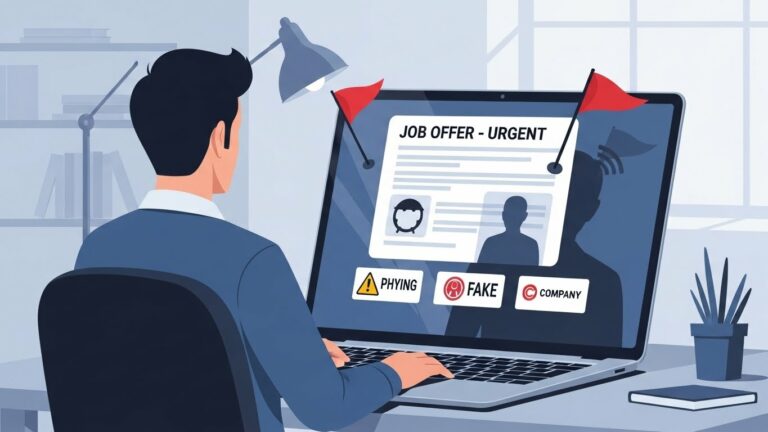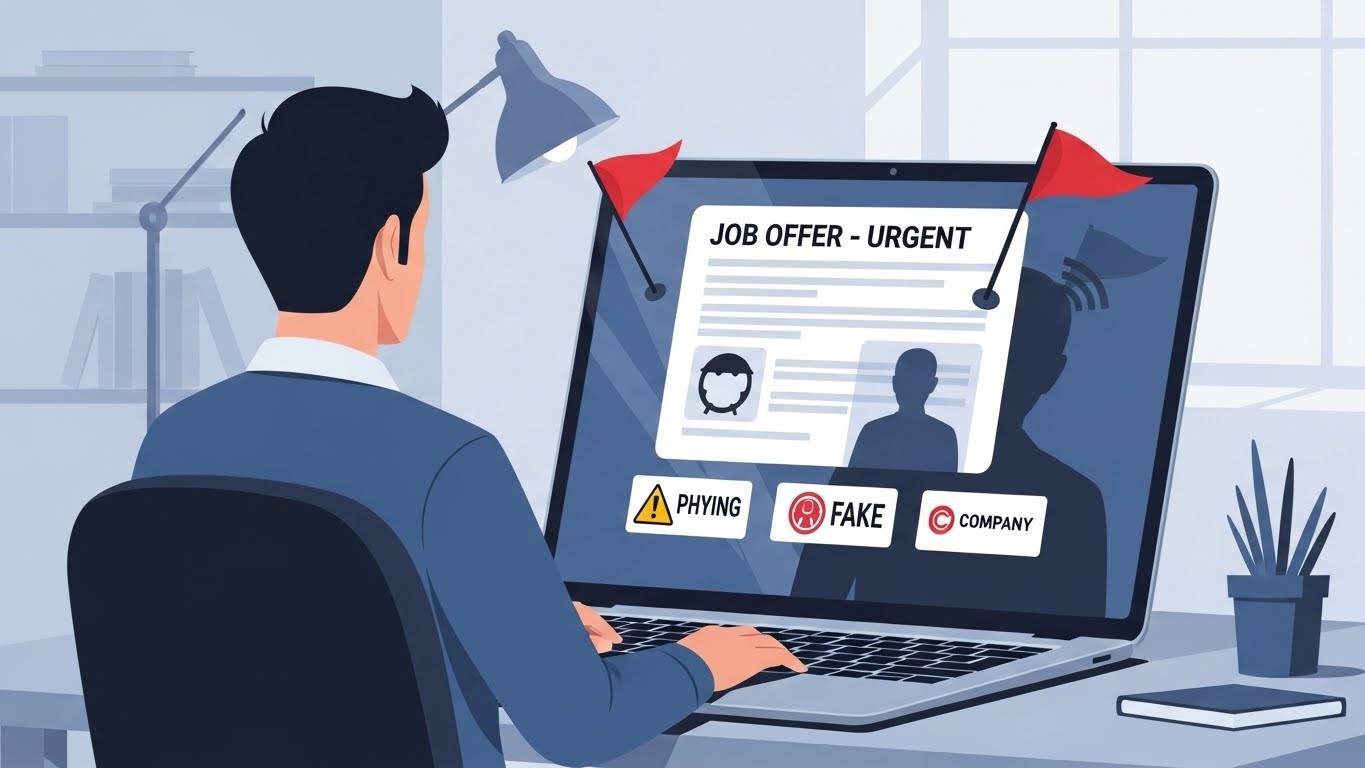
Ever received a job offer that sounds a little too good to be true? Maybe it came out of nowhere, from someone claiming to be a recruiter offering you a high-paying job overseas, or a remote position with big-name companies like Google or Amazon. It feels exciting at first—but also a bit suspicious, right?
In today’s digital world, fake job recruiters and employment scams have become more common than ever. Scammers prey on job seekers by pretending to be recruiters, luring victims with enticing job offers, only to steal personal information or money. These scams can be incredibly sophisticated, mimicking real company names and even using logos to appear legitimate.
That’s why learning how to check if a recruiter is legit is absolutely essential. Whether you’re searching for a remote gig, a corporate job, or a contract project, protecting yourself from fraud should be your first step. In this guide, we’ll walk you through 15 solid ways to verify a recruiter before you trust them with your information—or your career.
Let’s dig in and save yourself from unnecessary headaches or worse—being scammed.
Understanding What a Legit Recruiter Does
Let’s start by clearing the air: What does a real recruiter actually do?
A legitimate recruiter acts as a bridge between employers and potential employees. Their job is to find the best candidates for open roles, screen them, conduct initial interviews, and present them to the hiring company. They work either in-house (as part of a company’s HR team) or through recruiting agencies. These professionals usually communicate clearly, follow a structured hiring process, and maintain a degree of professionalism in every interaction.
Red flags of a fake recruiter:
- Offering a job without an interview
- Asking for money to process your application
- Refusing to share company contact info
- Pressuring you to act fast
- Vague details about the role or employer
Real recruiters do NOT promise jobs in return for fees or require sensitive data upfront (like bank info or passport numbers). If someone does, they’re likely a scammer hiding behind a fake identity.
Want a simple rule? If it sounds too good to be true, it probably is.
Check the Recruiter’s Email Address
The first step to sniffing out a fake recruiter is simple: look at their email address.
Real recruiters usually use a company domain email—for example, john.smith@companyname.com. Scam recruiters often use free email services like @gmail.com, @yahoo.com, or strange-looking domains.
Here’s what to do:
- Look at the domain after the @ symbol
- Google the domain to check if it belongs to a real company
- Visit the company’s site to see if the domain matches
Let’s say someone messages you from recruitingjobs2023@gmail.com saying they’re from Deloitte. That’s a major red flag. A real Deloitte recruiter will use an email like @deloitte.com.
Scammers are smart—they might even use lookalike domains, like @deloitecareers.com. A quick Google search or a WHOIS domain check can help you figure out if it’s real or a fake.
Look Up the Recruiter’s LinkedIn Profile
LinkedIn is where legit recruiters live. If someone contacts you claiming to be a recruiter, but you can’t find them on LinkedIn—or their profile looks suspicious—you should raise your guard.
What a legit LinkedIn profile includes:
- Professional photo (not a stock image)
- Full name and job title
- Employment history
- Real company links
- Endorsements or activity (comments, shares)
Fake profiles often show:
- No profile photo or a generic stock image
- Very few connections (usually under 50)
- No real work history or vague titles
- Recently created accounts
You can also check if they’re connected to the company they claim to represent. Look at the company’s official LinkedIn page and search their employee list.
Bonus tip: Send them a connection request and ask questions. If they avoid replying or give sketchy answers, that’s a bad sign.
Verify the Recruiter’s Company
Okay, so now you’ve got a name and an email. Next step? Confirm the company actually exists and that this recruiter works there.
Here’s how you can verify:
- Search the company on Google. Look for an official website and contact details.
- Check WHOIS data on the domain to see how long it’s been active.
- Browse LinkedIn to see if the company has a verified page.
- Look for employee reviews on Glassdoor or Trustpilot.
If the company doesn’t have a website or has a super vague landing page with no contact info, that’s a major red flag. Legit companies invest in their online presence.
Also, search for scam reports by typing the company name + “scam” into Google. You’d be surprised how often fake recruiting websites are reported by victims.
Cross-Check Job Offers on the Company Website
Let’s say a recruiter tells you there’s an urgent vacancy and you’ve been shortlisted. Sounds great, right? But wait—does that job even exist?
One of the easiest ways to catch a scam is by checking if the job listing is real. Go directly to the company’s “Careers” page and look for the job title. If it’s not there, ask the recruiter why it’s not listed.
Sometimes, real recruiters may reach out about positions not yet posted publicly. In that case, ask for:
- The team you’ll be joining
- The name of the hiring manager
- The job ID (if internal)
If they can’t answer clearly, back off. No legit recruiter hides job details.
Assess the Communication Style
Communication is everything—especially when it comes to identifying scams. A legit recruiter will speak (or write) professionally, provide clear information, and be happy to answer your questions. A scammer? Not so much.
Here’s what you should watch out for in their messages or emails:
Signs of a legit recruiter’s communication:
- Proper grammar and spelling
- Clear job description with realistic expectations
- A formal tone (but not robotic)
- Contact information, including phone and LinkedIn
- Willingness to schedule calls or video chats
Scammer red flags:
- Poor grammar or spelling mistakes
- Overly enthusiastic language like “Congratulations!!! You’ve been selected!!!”
- No company information or recruiter signature
- Unusual urgency like “You must respond within 2 hours or lose the job”
Also, trust your gut. If something feels “off,” it probably is. Real professionals don’t rush you into decisions or avoid your questions. If you ask about the job title, company culture, or team and they give vague responses or copy-pasted blurbs, run for the hills.
Bonus tip: Ask for a video call. Most fake recruiters will come up with excuses to avoid face-to-face meetings.
Do a Reverse Image Search of Their Photo
Scammers often steal photos from stock websites, LinkedIn, or social media to create fake recruiter profiles. But guess what? You can bust them using a reverse image search.
Here’s how to do it:
- Right-click the recruiter’s photo and save it.
- Go to Google Images or TinEye.
- Upload the image and check where else it appears online.
If that same photo is showing up on multiple profiles with different names—or if it leads to a stock image site—it’s fake. Real recruiters don’t need to borrow someone else’s face.
Also, if their image looks too polished (like a model shoot), and the profile is vague or new, that’s another clue. A reverse image search only takes a few seconds and can save you from a major scam.
Ask for Official Company Contact
Want to quickly verify a recruiter’s identity? Ask them to provide an official company contact—either someone from HR or the hiring manager for the job.
Here’s what to ask:
- “Can I speak with someone from your HR team to confirm this opportunity?”
- “Is there a hiring manager I can speak to directly?”
A legit recruiter won’t hesitate. They’ll either give you a company email, connect you with someone on a call, or provide a LinkedIn contact.
Scammers, on the other hand, will:
- Avoid giving names or direct contacts
- Insist everything must go through them
- Make excuses like “The HR manager is too busy” or “We work through WhatsApp only”
Pro tip: You can also contact the company yourself using the phone number or email listed on their official website. Just ask, “Is this person a recruiter working with your company?” If they’ve never heard of them—you’ve got your answer.
Look for Unrealistic Promises
If it sounds like a dream job with no catch… wake up.
Scammers know how to bait people. They’ll offer high salaries, flexible hours, or even international roles that require little to no experience. But once you’re hooked, they’ll ask for something—usually money or sensitive information.
Watch out for these red-flag promises:
- “$100,000 per year with no experience needed”
- “Immediate job offer—no interview required!”
- “Visa, flight, and accommodation all paid—just pay the processing fee”
- “You’ve been selected out of 5,000 applicants!”
Real recruiters talk about expectations, qualifications, and interview stages. They don’t give jobs away like prizes.
Ask questions like:
- “What’s the expected skill level?”
- “Who would I be reporting to?”
- “What’s the interview process like?”
If they dodge the questions and keep hyping the offer, that’s a clear signal to back away.
Never Pay for a Job Offer
This can’t be said enough: Legit recruiters NEVER ask for money. If someone wants you to pay a “processing fee,” “application charge,” or “security deposit,” you’re dealing with a scammer.
This is one of the most common tactics used in fake job scams, especially for international jobs. They’ll say things like:
- “Pay $200 to reserve your spot”
- “You need to cover documentation costs”
- “Just a small fee to fast-track your application”
No legit recruiter or company will ever ask you to pay. Hiring costs are the employer’s responsibility, not yours.
If a recruiter brings up payment at any stage, cut communication immediately. You can also report them to anti-fraud organizations or platforms like Scamwatch or Better Business Bureau.
Check for Proper Job Description and Role Details
A legit job offer comes with structure. If the recruiter sends you a message like:
“We’re hiring! Amazing opportunity, great pay. Apply now!”—that’s not enough.
You should receive a detailed job description that includes:
- Job title
- Responsibilities
- Required qualifications or experience
- Work hours or schedule
- Location (even if remote)
- Salary range (sometimes optional)
- Reporting structure
Ask yourself:
- Is this description tailored to my skillset?
- Does it look like a real job post you’d see on LinkedIn or Indeed?
- Are there clear instructions on how to proceed?
If the details are too vague, copy-pasted, or nonexistent, that’s a problem. A real recruiter will give you context, expectations, and often a job ID or internal reference number.
Pro tip: Ask for a PDF or a company-branded job description file. Most fake recruiters won’t have one.
Check Online Reviews and Forums
You’re not the first person to deal with recruiters—and possibly not the first to encounter a scam. Online communities are goldmines of information.
Here’s where to look:
- Glassdoor – Check company reviews and hiring feedback.
- Reddit – Subreddits like r/scams, r/jobs, and r/recruitinghell often share personal experiences.
- Quora – Ask or search for experiences with the recruiter or company.
- Trustpilot – Reviews about recruitment agencies.
Search using terms like:
- “Recruiter name/company + scam”
- “Is [recruiter name] legit?”
- “Anyone heard of [company domain]?”
You’d be surprised how often others have already exposed a scam before it got to you.
Use Tools and Databases to Validate Recruiters
Sometimes you need more than just your gut. If you want hard proof that a recruiter is or isn’t legit, it’s time to use online tools and databases. The internet gives you access to all kinds of resources that can help you confirm someone’s identity and their association with a company.
Here’s a quick list of tools that can help:
- Hunter.io – Check if the email domain is associated with a real business.
- WHOIS Lookup – Find out who owns a website and when it was created.
- Email Checker – Tools like NeverBounce or ZeroBounce can validate if an email is real and active.
- LinkedIn Recruiter Badge – Many real recruiters use LinkedIn Recruiter, which is a paid tool and shows up as a badge on their profile.
- Better Business Bureau (BBB) – Search for the recruiter’s agency, especially if they’re in North America.
- Companies House (UK) or EDGAR (USA) – If the recruiter claims to be from a registered company, these government tools can verify their existence and status.
Using these tools can give you solid confirmation. For instance, if you plug their email into Hunter.io and it returns nothing associated with a company, or if the WHOIS lookup says the domain was registered just last month—that’s fishy.
Remember, scammers are getting more sophisticated, so you’ll need to be just as smart when it comes to checking them out.
What to Do If You Suspect a Fake Recruiter
If your instincts tell you something’s wrong—or you’ve already noticed some red flags—don’t ignore it. You have options, and acting fast can save you or others from being scammed.
Here’s what you should do immediately:
- Stop all communication – Don’t send more personal information or respond to any further messages.
- Block the contact – Whether they messaged you on email, WhatsApp, Telegram, or LinkedIn, block and report them.
- Report the scam – Depending on your country, you can report the fake recruiter to:
- FTC (US): reportfraud.ftc.gov
- Action Fraud (UK): actionfraud.police.uk
- Scamwatch (Australia): scamwatch.gov.au
- Warn others – Post in forums like Reddit, LinkedIn, or Quora to help others avoid the same trap.
- Change passwords – If you sent them any sensitive info, like your resume with personal details, secure your accounts and consider a credit freeze if needed.
Lastly, be kind to yourself. Falling for a job scam doesn’t mean you’re naive—it means scammers are manipulative. What matters is how quickly you catch on and protect yourself moving forward.
Conclusion
Job hunting is already stressful enough without having to worry about getting scammed. But in a world full of fake recruiters, shady job offers, and sophisticated schemes, it’s more important than ever to stay sharp. Knowing how to check if a recruiter is legit could be the difference between landing your dream job—or becoming a scam victim.
To recap:
- Always verify their email and LinkedIn.
- Check the company they claim to represent.
- Trust your gut—if it feels off, it probably is.
- Never pay for a job or give out sensitive info too soon.
- Use tools and online forums to validate the recruiter and the offer.
Your career deserves to be taken seriously, and so do you. So take your time, do your homework, and don’t let anyone rush or pressure you into a decision.
The next time a recruiter reaches out, you’ll be ready—with your red-flag radar on high alert.
FAQs
1. Can I trust a recruiter who contacts me through WhatsApp or Telegram?
You should be cautious. While some international recruiters use messaging apps, a legit recruiter will usually follow up with an official company email and formal communication. If they only operate through chat apps, that’s a red flag.
2. How can I tell if a recruitment agency is fake?
Check their website, look up reviews, verify their business registration (like with BBB or Companies House), and see if they’re listed on LinkedIn. Fake agencies often lack credible online presence.
3. Is it normal for recruiters to ask for my passport or ID before an interview?
No. You should only provide sensitive documents after a job offer is made, and even then, only to official HR personnel through secure channels. If they ask for it early on, it’s suspicious.
4. What should I do if I’ve already sent my resume to a scammer?
If your resume includes personal info like your address, phone number, or ID, monitor your accounts for identity theft. Consider placing fraud alerts on your credit report and report the scam to local authorities.
5. Can I get scammed even if the recruiter uses a real company name?
Yes. Scammers often impersonate legitimate companies and even real employees. That’s why it’s critical to double-check their email domain, LinkedIn profile, and whether the job exists on the company’s official site.